Afrobeats & Afropop
Contemporary Lagos and Accra scenes connect African rhythmic lineages, pop, hip-hop and global digital distribution.
Lotus Family Connect Production
Step onto twelve stages around the world. Compare a realistic concert scene with an educational breakdown, then open the Sound Lab to play each genre’s instruments, scales and grooves yourself.
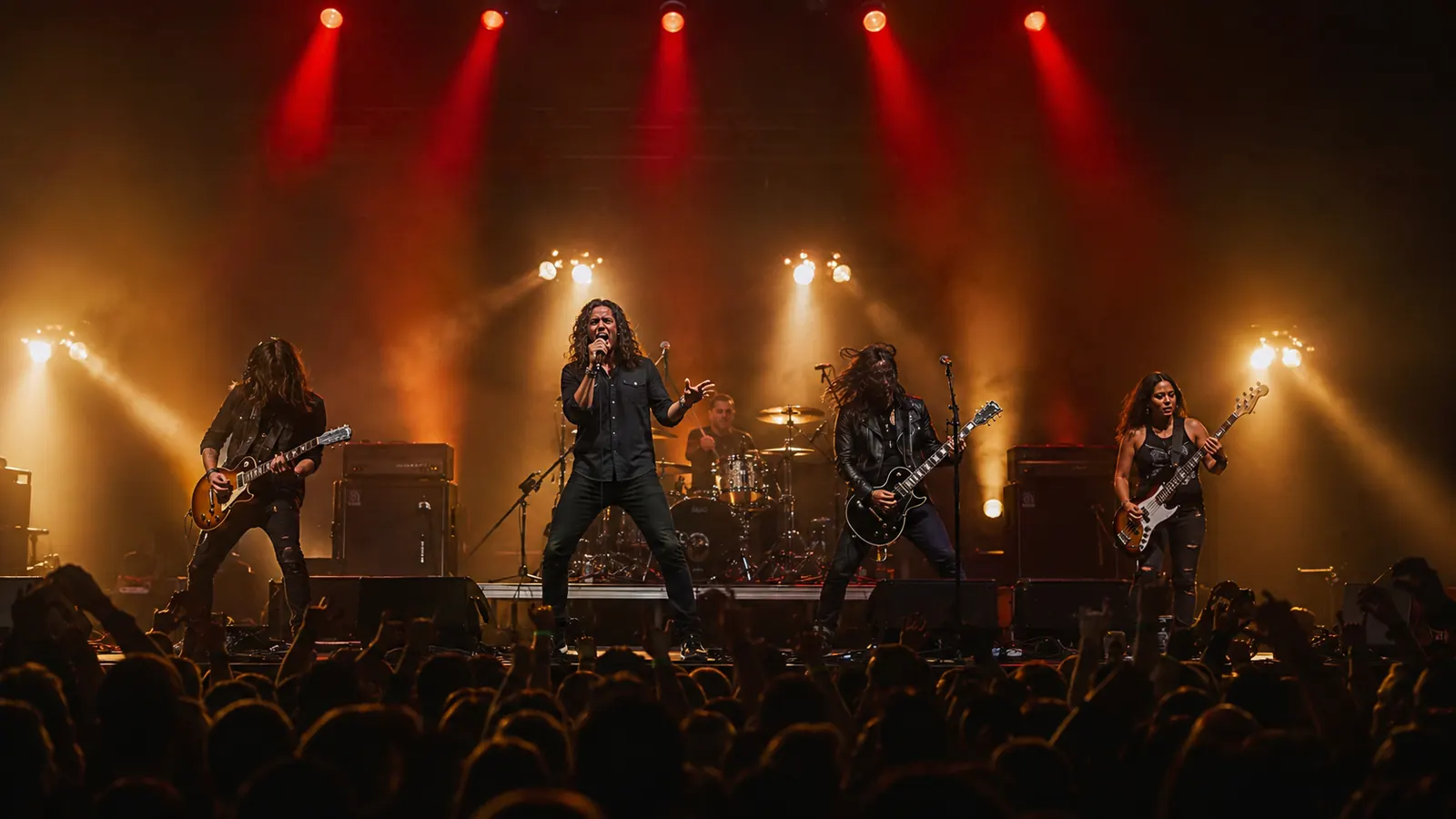
Band energy, amplified sound and a direct connection with the crowd.
YouTube playback is available after this package is hosted.
Open sample on YouTubePick a tune and tap a genre. The same melody is bent into that genre’s home scale and played on its signature instrument, at its tempo and feel. Outlined notes in each strip are the ones the scale changed.
Each tradition is a living family of styles—not a rigid box. These concise profiles give learners a useful starting point.
Genres become recognizable through recurring combinations of rhythm, harmony, timbre, structure and performance practice.
Contemporary Lagos and Accra scenes connect African rhythmic lineages, pop, hip-hop and global digital distribution.
Jamaican studio innovation, bass-forward production and mobile sound systems reshaped global popular music.
Salsa, cumbia, reggaetón, bachata and regional traditions circulate through migration, dance floors and streaming.
MCing, DJing, beat-making, dance and visual culture developed into a worldwide language of local identity.
Orchestras, conservatories, opera houses and chamber ensembles sustain evolving written and performed traditions.
Studios, DJs, clubs and festivals turn production technology into communal, physical listening experiences.
Rock, EDM, hip-hop and upbeat pop can increase arousal and movement.
Jazz, classical, soul and singer-led country can support focused or contemplative listening.
Gospel, reggae, dance music and festival traditions make participation feel collective.
Country, hip-hop, soul and folk-connected traditions foreground voice, character and lived experience.
Latin, Afrobeats, reggae, pop and EDM organize sound around the body and social dance.
Follow instruments, producers, regional scenes and collaborations to travel beyond a genre label.
Compare how musical characteristics, listener motivations and songwriting approaches converge across genres. Values are interpretive learning guides—not fixed rankings.
Country and hip-hop often reward close attention to detail, character, place and first-person testimony. Pop frequently compresses a situation into an instantly legible emotional hook.
Repetition helps listeners remember, participate and anticipate. A hook may be melodic, lyrical, rhythmic or produced as a distinctive sound.
Gospel, soul, jazz, blues, Afrobeats and many African-diasporic traditions use musical dialogue between leader and group, voice and instrument, or performer and audience.
Jazz improvisation and hip-hop flow both involve real-time choice within learned structures. The vocabulary differs; the creative principle of variation is shared.
Every genre has a sound built from particular instruments. Explore the six families, see which instruments dominate each genre and press ▶ to hear the ones with recordings.
Select a genre name to focus it. Filter by family above.
Music lives in different settings, from a silent concert hall to a sweaty dance floor. The setting shapes who leads, how much is improvised and what the audience does.
Check what you have learned. Name genres, instruments and scales by ear, then test your knowledge of origins, instruments and performance practice.
Follow the four steps. 1 Discover: meet each genre on its stage, browse the directory, see which instruments dominate it and how it is performed. 2 Play: use the Sound Lab to play its instrument, scales and groove. 3 Understand: compare genres through Musical DNA, the comparison matrix, ecosystems, listener needs and songwriting. 4 Test yourself: take the listening and knowledge assessment. Scenes and audio examples are representative teaching models, not documentation of specific artists or recordings.
Editorial framing draws on widely used music scholarship and reference traditions: Smithsonian Folkways, Library of Congress music collections, Encyclopaedia Britannica genre overviews, AllMusic style guides, GRAMMY genre resources, and Oxford/Grove music scholarship.
Samples are streamed from YouTube and are not included in this package. Availability, advertising, regional restrictions and embedding permission are controlled by YouTube and each rights holder.
Acoustic and electric instruments use short recordings of real instruments, pitched to every key from a few sampled notes. Electronic voices (supersaw, pluck, 808, sub bass, pad) are synthesized live. Scales, chord progressions, grooves and short phrases are simplified teaching examples written for this explorer. They are not transcriptions of specific recordings. Instrument samples: tonejs-instruments, CC BY 3.0. Drum samples: Tone.js audio collection.
All stage images are locally bundled, AI-generated representative scenes. They do not depict named real artists or claim to document a specific event.